
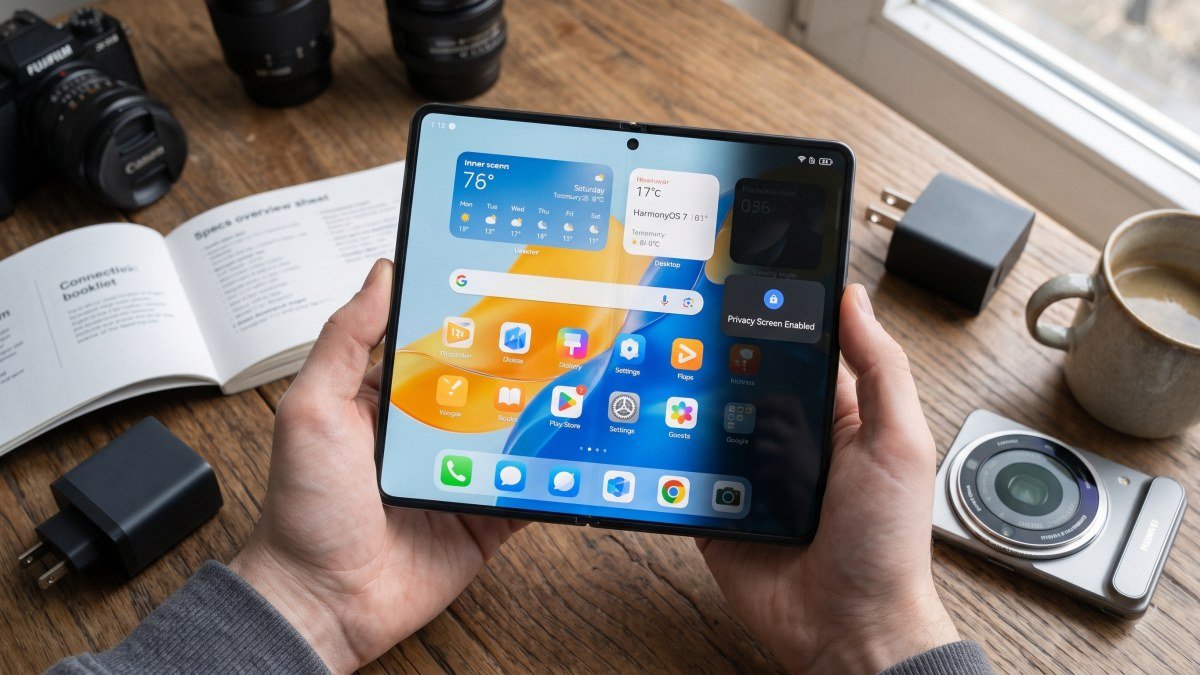
Huawei Mate X8 Launches Today: 6,000mAh Battery, Privacy Display, and 10x External Zoom Explained
While American consumers are busy hunting down Black Friday 2026 smartphone deals on the Samsung Galaxy Z Fold 8 and the Google Pixel 11 Pro Fold, Huawei has just dropped a massive hardware bombshell overseas. Launching today, November 24, 2026, alongside the compact MateBook Fold S, the Huawei Mate X8 is making every foldable currently sitting on Best Buy shelves look a full generation behind.
For years, foldable phones in the United States have been defined by compromises: noticeably smaller batteries, visible screen creases, and downgraded camera sensors compared to traditional slab flagships. With the Mate X8, Huawei is throwing that entire rulebook out the window. Packing an expansive 8.15-inch near-creaseless inner display, a jaw-dropping 6,000mAh+ silicon-carbon battery (reportedly pushing up to 6,200mAh), hardware-level Privacy Display technology, and support for an attachable 1-inch 10x optical zoom camera module, the Mate X8 is a masterclass in mobile engineering.
Even though US trade restrictions mean you will not be able to finance this device at AT&T, Verizon, or T-Mobile, the Mate X8 sets the exact benchmark that Apple and Samsung will be forced to chase in 2027. Here is a complete breakdown of the Huawei Mate X8 launch specs, how its modular camera works, and how it compares to the foldables you can actually buy in America today.
The Display Breakthrough: 8.15-Inch Canvas and Hardware Privacy
The first thing that immediately separates the Huawei Mate X8 from the competition is its sheer screen real estate. Unfolded, the device reveals a massive 8.15-inch LTPO OLED inner display (rounded to 8.2 inches in some regional listings) paired with a spacious 6.5-inch LTPO OLED cover screen. Both panels feature an adaptive 1–120Hz refresh rate and utilize Ultra Thin Glass (UTG) engineered to deliver an ultra-flat, virtually invisible crease.
This is a particularly stinging contrast for Apple fans. While early adopters are currently dealing with the frustrating iPhone Duo screen cracking controversy ("Crackgate") on a smaller 7.6-inch panel, Huawei is shipping a wider, flatter, and more durable canvas rated for IP58 and IP59 dust and water resistance.
Even more intriguing for commuters and business executives is the addition of hardware-level Privacy Display technology. Similar to the feature currently rumored in Galaxy S27 Ultra M16 OLED leaks, Huawei’s Privacy Display narrows the viewing angles of the screen at the pixel level. When toggled on, you can read sensitive emails, bank statements, or messages on a crowded flight or subway without the person sitting next to you seeing anything other than a darkened screen.
The 6,000mAh+ Battery: Ending Foldable Battery Anxiety
If there is one universal complaint among Galaxy Z Fold 8 and Pixel 11 Pro Fold owners, it is battery life. Powering a tablet-sized OLED screen with a 4,400mAh to 4,600mAh battery forces most US foldable users to hunt for a wall outlet by dinner time.
Huawei has obliterated that bottleneck. Thanks to next-generation, high-density silicon-carbon battery chemistry, the Mate X8 packs a massive 6,000mAh+ battery (with launch listings pointing to a staggering 6,200mAh cell) inside a body that is thinner and lighter than last year's Mate X7.
Better yet, you won't be tethered to a charger for two hours waiting for it to refill. The Mate X8 supports rapid 66W to 100W wired fast charging alongside 50W wireless charging. That is more than double the charging speed offered by Samsung and Apple's current 2026 flagships.
The Ruiying Z10 Accessory: 1-Inch Sensor & Continuous 10x Optical Zoom
Foldable smartphones are notoriously thin, which physically prevents manufacturers from installing massive camera sensors and deep periscope zoom lenses. Huawei’s built-in circular rear camera array is already impressive—headlined by a 50MP variable-aperture primary sensor, a 40MP ultra-wide lens, and a 50MP periscope telephoto camera.
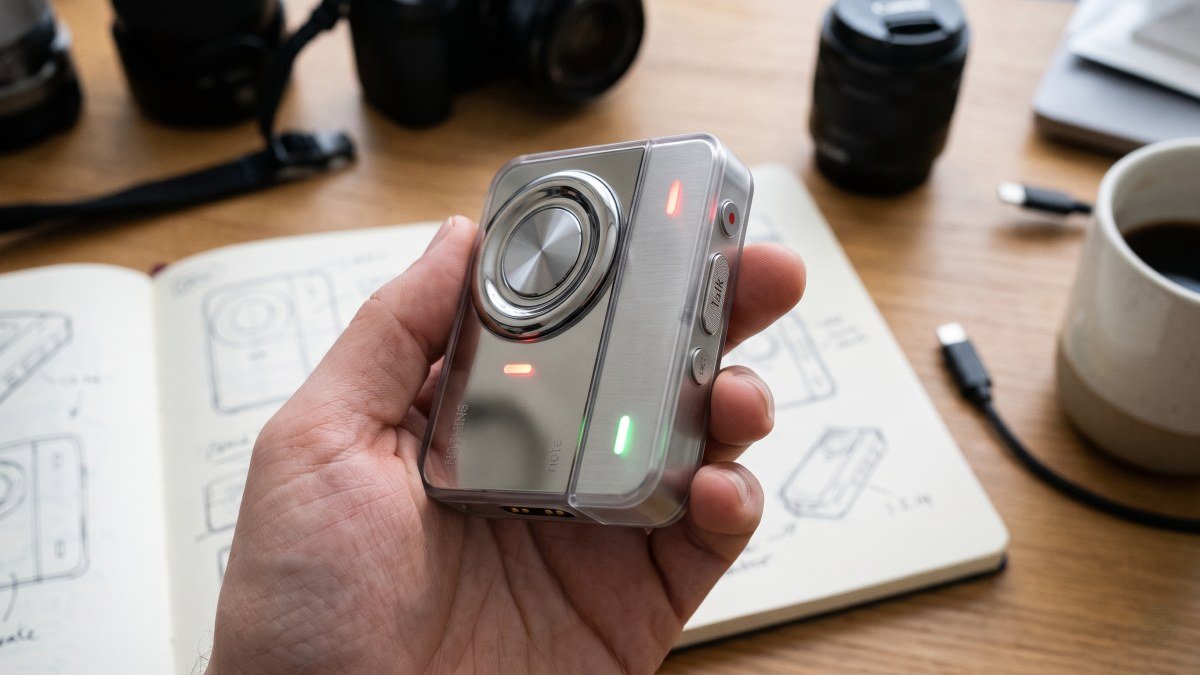
However, the headline-grabbing innovation is Huawei’s support for the Ruiying Z10 external camera module. Designed to attach directly to the Mate X8 via a specialized lens mount (particularly targeted at the top-tier Collector's Edition), the Ruiying Z10 transforms the foldable into a legitimate point-and-shoot mirrorless camera:
- 1-Inch 50MP RYYB Sensor: Captures dramatically more light than any built-in smartphone sensor, delivering natural optical bokeh and crisp night photography.
- Continuous 10x Optical Zoom: Unlike standard phones that digitally crop between fixed zoom lengths, the Ruiying Z10 uses moving glass elements to deliver true, lossless optical zoom.
- Variable Aperture: Gives mobile photographers physical control over depth of field and exposure.
Hardware Showdown: Huawei Mate X8 vs. US Flagship Foldables
To put Huawei's November 24 launch into perspective for American buyers, here is how the Mate X8 stacks up against the two biggest book-style foldables dominating the 2026 US foldable showdown:
| Specification | Huawei Mate X8 (2026) | Samsung Galaxy Z Fold 8 | Apple iPhone Duo |
|---|---|---|---|
| Inner Display | 8.15" LTPO OLED (Privacy Display) | 7.6" Dynamic AMOLED 2X | 7.6" Flexible OLED |
| Processor | HiSilicon Kirin 9050 / 9050 Pro | Snapdragon 8 Elite Gen 5 | Apple A20 Pro |
| Battery & Charging | 6,000mAh+ (up to 6,200mAh) / 66W–100W Wired | ~4,400mAh / 45W Wired | ~4,500mAh / MagSafe |
| Operating System | HarmonyOS 7 (No Google Services) | Android 17 (One UI 9.5) | iOS 20 |
| Est. Starting Price | ~CNY 12,999 (~$1,800 USD) | $1,899.99 (On sale for ~$1,549) | $1,999.00 |
Swipe sideways to see all table columns →
- Huawei Mate X8 (2026)
- 8.15" LTPO OLED (Privacy Display)
- Samsung Galaxy Z Fold 8
- 7.6" Dynamic AMOLED 2X
- Apple iPhone Duo
- 7.6" Flexible OLED
- Huawei Mate X8 (2026)
- HiSilicon Kirin 9050 / 9050 Pro
- Samsung Galaxy Z Fold 8
- Snapdragon 8 Elite Gen 5
- Apple iPhone Duo
- Apple A20 Pro
- Huawei Mate X8 (2026)
- 6,000mAh+ (up to 6,200mAh) / 66W–100W Wired
- Samsung Galaxy Z Fold 8
- ~4,400mAh / 45W Wired
- Apple iPhone Duo
- ~4,500mAh / MagSafe
- Huawei Mate X8 (2026)
- HarmonyOS 7 (No Google Services)
- Samsung Galaxy Z Fold 8
- Android 17 (One UI 9.5)
- Apple iPhone Duo
- iOS 20
- Huawei Mate X8 (2026)
- ~CNY 12,999 (~$1,800 USD)
- Samsung Galaxy Z Fold 8
- $1,899.99 (On sale for ~$1,549)
- Apple iPhone Duo
- $1,999.00
Kirin 9050 Pro, HarmonyOS 7, and Pricing Realities
Under the hood, the Huawei Mate X8 is powered by Huawei’s in-house Kirin 9050 / Kirin 9050 Pro silicon, running HarmonyOS 7 right out of the box. The standard edition is offered in 12GB+256GB and 12GB+512GB configurations, while the ultra-premium Collector's Edition scales up to 16GB of RAM and 1TB of storage. Huawei is also leaning heavily into luxury aesthetics, offering five distinct finishes including Purple Gold Brocade, Azure Sky Black, Snowy White, Qingyun Brocade, and Danxia Brocade.
In China, pricing is expected to start around CNY 12,999 (roughly $1,800 USD), with the Collector's Edition commanding a higher premium.
Should US Buyers Import the Huawei Mate X8?
As tempting as a 6,200mAh battery and a 10x external zoom lens sound, American consumers should think twice before importing the Mate X8. Because the device runs HarmonyOS 7 without native Google Mobile Services (no Google Play Store, Google Maps, or Android Auto out of the box) and lacks full 5G band certification for Verizon, AT&T, and T-Mobile, it is a logistical headache for daily US use.
However, the Mate X8 is still massive news for US tech fans. It proves that 6,000mAh+ batteries, near-invisible creases, and hardware privacy screens are physically possible in a slim foldable today. With both Samsung and Apple already rumored to be developing bigger, wider foldables for 2027, Huawei’s November 24 launch just turned up the heat on Silicon Valley and Seoul to finally stop holding back on foldable hardware.