D Dev Duniya
Back to Journal
4 min read

KNN Algorithm in Machine Learning with Example - DevDuniya

Ashish Yadav

Ashish Yadav

Published on Dev Duniya
Keep exploring
Compare the details before you buy.

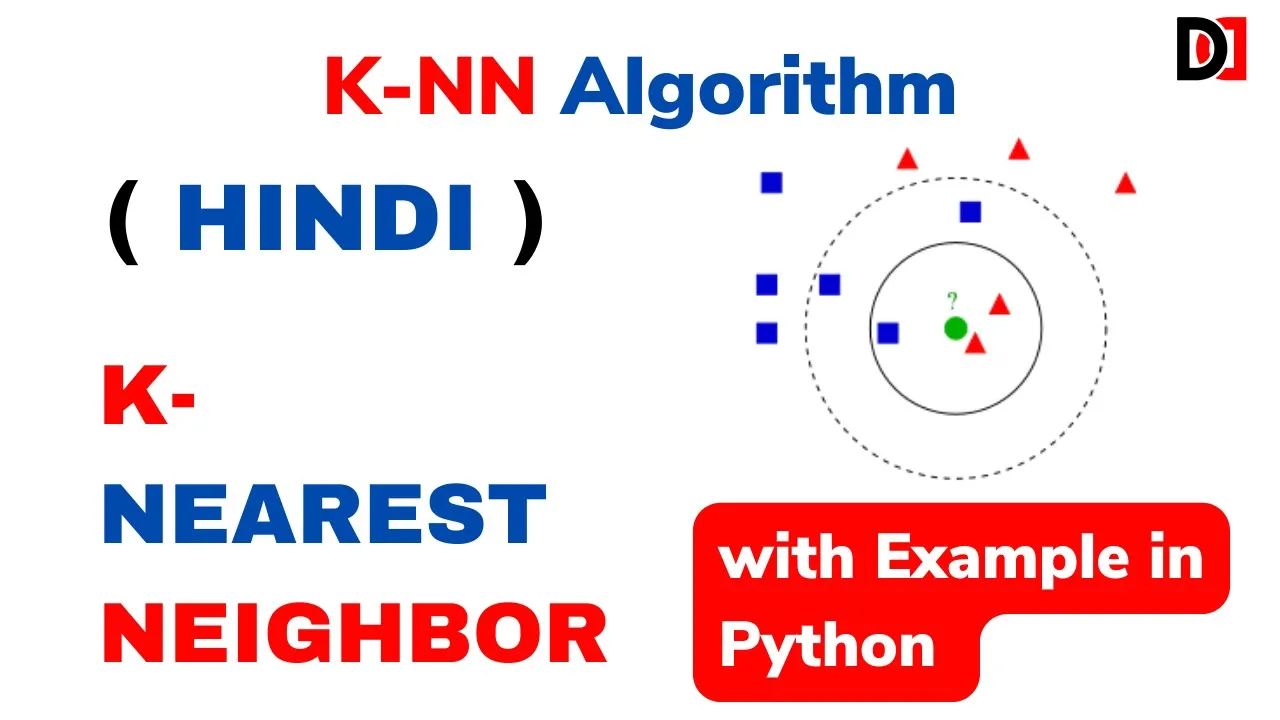
K-Nearest Neighbors (KNN) is a simple yet powerful supervised learning algorithm used primarily for classification tasks, although it can also be adapted for regression. It's a non-parametric and lazy learning algorithm, meaning it doesn't make any assumptions about the underlying data distribution and doesn't learn an explicit model during training. Instead, it stores the entire training dataset in memory and uses it to make predictions on new, unseen data points.

How K-NN Works:

Training Phase:

  • Data Storage: The KNN algorithm essentially "memorizes" the entire training dataset. No explicit model is built during this phase.

Prediction Phase:

  • Distance Calculation: When presented with a new, unseen data point, the algorithm calculates the distance between this point and all the data points in the training set.
    • Common Distance Metrics:
      • Euclidean Distance: The most commonly used distance metric, calculated as the square root of the sum of squared differences between corresponding features.
        • Formula: √(∑(x1i - x2i)²) where x1i and x2i are the values of the ith feature for the two data points.
      • Manhattan Distance: Calculated as the sum of absolute differences between corresponding features.
        • Formula: ∑|x1i - x2i|
  • K-Nearest Neighbors: The algorithm identifies the 'k' nearest neighbors to the new data point based on the calculated distances. The value of 'k' is a crucial hyperparameter that needs to be carefully chosen.  
  • Classification:
    • In classification tasks, KNN assigns the new data point to the class that is most frequent among its 'k' nearest neighbors. This is often referred to as "majority voting."
  • Regression:
    • In regression tasks, KNN predicts the value for the new data point by averaging (or taking a weighted average) of the target values of its 'k' nearest neighbors.

Choosing the Right k Value

The choice of the parameter 'k' significantly impacts the performance of the KNN algorithm:

  • Small k:
    • Can be sensitive to noise and outliers in the data.
    • May lead to overfitting, where the model performs well on the training data but poorly on unseen data.
  • Large k:
    • Can smooth out noise and improve generalization, but may miss local patterns in the data.
    • May lead to underfitting, where the model fails to capture the underlying patterns in the data.

Finding the optimal value of 'k' often requires experimentation and techniques like cross-validation.

Advantages of KNN:

  • Simplicity: Easy to understand and implement.
  • Versatility: Can be used for both classification and regression.
  • No Training Phase: Requires minimal training time.
  • Effective for Complex Decision Boundaries: Can capture complex non-linear relationships in the data.

Disadvantages of KNN:

  • Sensitive to the choice of 'k'.
  • Computational Cost: Can be computationally expensive for large datasets, especially during the prediction phase, as it requires calculating distances to all training points.  
  • Sensitive to noisy data and outliers.
  • Curse of Dimensionality: Performance can degrade significantly in high-dimensional spaces.

Applications of KNN:

  • Recommendation Systems: Recommending products, movies, or music based on user preferences and the preferences of similar users.
  • Image Recognition: Classifying images based on visual features.
  • Anomaly Detection: Identifying unusual or abnormal data points.
  • Financial Applications: Credit scoring, fraud detection.

KNN Algorithm Example:

from sklearn.neighbors import KNeighborsClassifier
from sklearn.datasets import load_iris
from sklearn.model_selection import train_test_split
from sklearn.metrics import accuracy_score

# Load the iris dataset
iris = load_iris()
X = iris.data
y = iris.target

# Split data into training and testing sets
X_train, X_test, y_train, y_test = train_test_split(X, y, test_size=0.2, random_state=42)

# Create a KNN classifier with k=3
knn = KNeighborsClassifier(n_neighbors=3) 

# Train the model (Note: KNN has no explicit training phase)
knn.fit(X_train, y_train)

# Make predictions
y_pred = knn.predict(X_test)

# Evaluate accuracy
accuracy = accuracy_score(y_test, y_pred)
print("Accuracy:", accuracy)

K-Nearest Neighbors is a simple yet effective algorithm with various applications in machine learning. By understanding its strengths and limitations and carefully choosing the value of 'k', you can effectively apply KNN to a wide range of classification and regression problems.

Keep reading

12 latest articles

The newest stories from Dev Duniya, excluding the article you are reading.

All articles →

From the product catalog

Explore device specifications

Specification cards update automatically from published catalog products, grouped by brand.

Apple specifications

Explore Apple devices →
Apple Apple MacBook Pro 14-inch
Apple Apple MacBook Pro 14-inch specifications

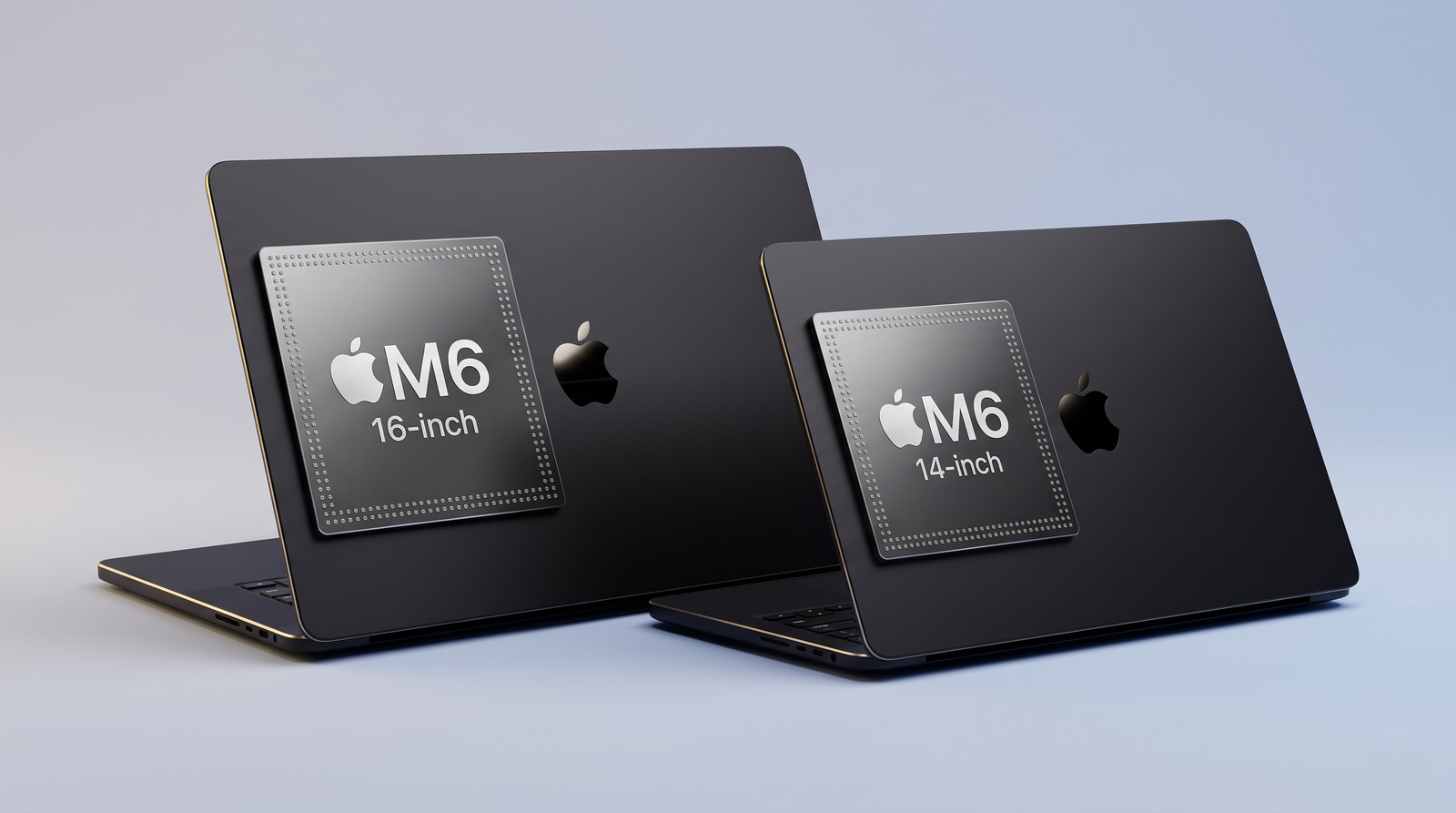
Experience unrivaled performance with the latest Apple MacBook Pro, available in 14-inch and 16-inch models powered by the revolutionary M6, M5 Pro, and M5 Max chips. Built for Apple Intelligence, these powerhouse laptops feature advanced Thunderbolt 5 ports, Wi-Fi 7, and optional Nano-texture displays for minimal glare. Maximize your creative potential with up to 128GB of unified memory in a sleek Space Black or Silver finish.

Display size
14-inch
Screen Type
Standard display (low reflectivity) or Nano-texture display (reduces reflections and glare in bright lighting)
External Display Support
Support for up to three external displays (M5 Pro) / Support for up to four external displays (M5 Max)
M6 Chip
12‑core CPU, 12‑core GPU, Dual 16‑core Neural Engine
See all specifications →
Apple Apple MacBook Pro 16-inch
Apple Apple MacBook Pro 16-inch specifications

Experience unrivaled performance with the latest Apple MacBook Pro, available in 14-inch and 16-inch models powered by the revolutionary M6, M5 Pro, and M5 Max chips. Built for Apple Intelligence, these powerhouse laptops feature advanced Thunderbolt 5 ports, Wi-Fi 7, and optional Nano-texture displays for minimal glare. Maximize your creative potential with up to 128GB of unified memory in a sleek Space Black or Silver finish.

Display size
16-inch
Screen Type
Standard display (low reflectivity) or Nano-texture display (reduces reflections and glare in bright lighting)
External Display Support
Support for up to three external displays (M5 Pro) Support for up to four external displays (M5 Max)
M5 Pro Chip
18‑core CPU, 20‑core GPU, 16‑core Neural Engine
See all specifications →
Apple Apple iPhone Duo
Apple Apple iPhone Duo specifications

Apple iPhone Duo is a new-generation iPhone model focused on a sleek design, powerful performance, and everyday usability. Explore iPhone Duo specifications, features, display, cameras, battery, and expected price in the USA. Get the latest information about Apple iPhone Duo and its key features. Compare iPhone Duo with other popular Apple iPhone models.

Size (inches)
Open: 4.64 x 6.48 x 0.21 Closed: 4.64 x 3.31 x 0.44
Weight (ounces)
8.96
Display size (inches)
Inner: 7.6-inch (diagonal) all-screen OLED folding display Outer: 5.4-inch (diagonal) all-screen OLED display
Resolution (pixels)
Inner: 1878-by-2670-pixel resolution at 430 ppi Outer: 1398-by-2034-pixel resolution at 460 ppi
See all specifications →
Apple Apple iPhone 18 Pro Max
Apple Apple iPhone 18 Pro Max specifications

Apple iPhone 18 Pro Max is a high-end flagship smartphone designed for powerful performance and advanced photography. Explore iPhone 18 Pro Max specifications, features, display, cameras, battery, and expected price in the USA. Discover the latest upgrades and key features of Apple’s largest Pro iPhone. Compare iPhone 18 Pro Max with other premium flagship smartphones.

Size (inches)
6.43 x 3.07 x 0.34
Weight (ounces)
8.78
Display size (inches)
6.9-inch (diagonal) all-screen OLED display
Resolution (pixels)
2868-by-1320-pixel resolution at 460 ppi
See all specifications →
Apple Apple iPhone 18 Pro
Apple Apple iPhone 18 Pro specifications

Apple iPhone 18 Pro is a premium flagship smartphone with advanced performance and an upgraded camera system. Explore iPhone 18 Pro specifications, features, display, cameras, battery, and expected price in the USA. Get the latest details about Apple’s new Pro model and its key upgrades. Compare iPhone 18 Pro features with other flagship smartphones.

Size (inches)
5.91 x 2.83 x 0.34
Weight (ounces)
7.44
Display size (inches)
6.3-inch (diagonal) all-screen OLED display
Resolution (pixels)
2622-by-1206-pixel resolution at 460 ppi
See all specifications →

Google specifications

Explore Google devices →
Google Google Pixel 12
Google Google Pixel 12 specifications

Upgrade to the Google Pixel 12, an advanced 5G AI smartphone. Experience seamless performance powered by the custom Google Tensor G7 processor. Enjoy a stunning 6.3-inch OLED Actua display and take flawless photos with the powerful 50MP dual-camera system. Built with an adaptive all-day battery and seamless Google Gemini AI integration, it is the perfect unlocked device for everyday brilliance.

Size (inches)
6.02 x 2.83 x 0.34
Weight (ounces)
6.95
Display size (inches)
6.3-inch (diagonal) OLED display
Resolution (pixels)
1080 x 2424 pixels
See all specifications →
Google Google Pixel 12 Pro
Google Google Pixel 12 Pro specifications

Discover the new Google Pixel 12 Pro, the ultimate 5G AI smartphone. Powered by the next-generation Google Tensor G7 chip and built-in Gemini AI, it delivers blazing-fast performance. Capture professional-grade photos with the advanced 50MP Pro Triple Camera system featuring 5x optical zoom. Complete with a stunning 6.3-inch Super Actua display, all-day adaptive battery, and a premium titanium frame. Upgrade to the smartest Android phone today.

Size (inches)
6.02 x 2.83 x 0.33
Weight (ounces)
7.3
Display size (inches)
6.31-inch LTPO OLED display
Resolution (pixels)
2856 x 1280 pixels
See all specifications →
Google Google Pixel 12 Pro XL
Google Google Pixel 12 Pro XL specifications

Go bigger with the Google Pixel 12 Pro XL, the ultimate large-screen 5G AI smartphone. It boasts a massive 6.8-inch OLED display and the lightning-fast Google Tensor G7 chip. Capture master-level photography using the 50MP Pro Triple Camera setup. Equipped with a massive 5500mAh battery for extended endurance and fast 67W charging, this unlocked flagship redefines premium power.

Size (inches)
6.43 x 3.07 x 0.34
Weight (ounces)
8.18
Display size (inches)
6.8-inch LTPO OLED Super Actua display
Resolution (pixels)
2992 x 1344 pixels
See all specifications →
Google Google Pixel 12 Pro Fold
Google Google Pixel 12 Pro Fold specifications

Transform your mobile experience with the Google Pixel 12 Pro Fold. This unlocked 5G AI foldable smartphone unfolds into a gorgeous 8-inch dual-UTG inner OLED display for next-level multitasking and entertainment. Powered by the Google Tensor G7 chip, it features flexible triple-camera photography, advanced Gemini AI, and a highly durable folding hinge design.

Size (inches) - Unfolded
6.24 x 5.64 x 0.16
Size (inches) - Folded
6.24 x 2.87 x 0.35
Weight (ounces)
7.58
Main Display
8.0-inch Foldable LTPO OLED, 120Hz
See all specifications →

Samsung specifications

Explore Samsung devices →