
DevDuniya
Aug 12, 2026
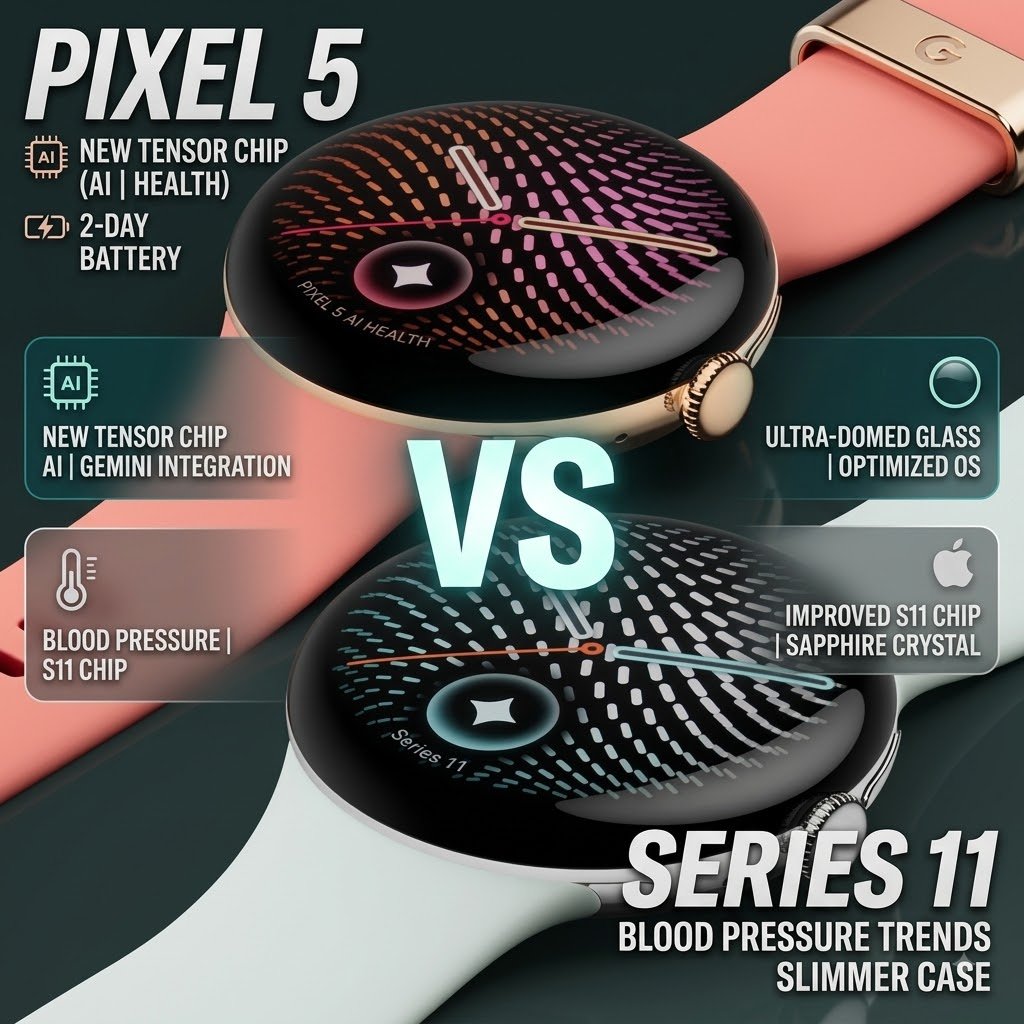
The smartwatch industry is moving at lightning speed, and for consumers in the United States, the ultimate battle for your wrist has never been more intense. If you are in the market for a premium wearable in 2026, your decision likely boils down to the two absolute titans of the tech world: the newly launched Google Pixel Watch 5 and the powerhouse Apple Watch Series 11.
Both of these devices represent the pinnacle of their respective ecosystems. Apple continues to refine its industry-leading square design with advanced health sensors and ultra-fast 5G connectivity. On the other side of the aisle, Google has just dropped a massive update with the Pixel Watch 5, bringing a blindingly bright 3,000-nit screen, exclusive Gemini AI features, and groundbreaking health tracking metrics that could change how we monitor chronic conditions.
But which one actually deserves your hard-earned dollars? Whether you are a fitness fanatic, a busy professional, or someone who just wants the best digital assistant on their wrist, we are breaking down every specification, design choice, and exclusive feature to help you make the smartest buying decision. Let’s dive into the ultimate 2026 smartwatch showdown! 💥
Before we dive into the real-world performance, let's take a look at how the raw hardware stacks up.
| Feature / Specification | ⌚ Google Pixel Watch 5 | 🍏 Apple Watch Series 11 |
|---|---|---|
| Sizes Available | 41mm & 45mm | 42mm & 46mm |
| Display Type & Brightness | Actua 360 AMOLED / 3,000 Nits | LTPO3 OLED / 2,000 Nits |
| Processor | Snapdragon W5 Gen 2 | Apple S10 Chip |
| Storage | 64GB | 64GB |
| Battery Life (Normal Use) | 30 to 40 Hours | 24 Hours |
| Cellular Connectivity | LTE Support | 5G Support |
| Key Health Features | Blood Pressure Trends, Insulin Resistance | Sleep Apnea, Hypertension Alerts |
| AI Integration | Offline Gemini AI | Siri with On-Device Processing |
| Starting Price (US) | $399 (Wi-Fi) | $399 (Aluminum GPS) |
When it comes to aesthetics, Google and Apple take completely opposite approaches, and your preference will likely dictate your purchase.
Apple Watch Series 11: The Refined Canvas
Apple has stuck to its iconic rectangular design, but the Series 11 has been stretched and flattened. Available in larger 42mm and 46mm sizes, it offers a massive amount of screen real estate. The display is an LTPO3 OLED panel peaking at 2,000 nits of brightness. For durability, the aluminum models feature Ion-X glass that is 2x more scratch-resistant than older generations, while the premium titanium models boast a nearly indestructible sapphire crystal front. If you love reading long texts or viewing complex workout metrics at a glance, the square screen is incredibly functional.
Google Pixel Watch 5: The Elegant Timepiece
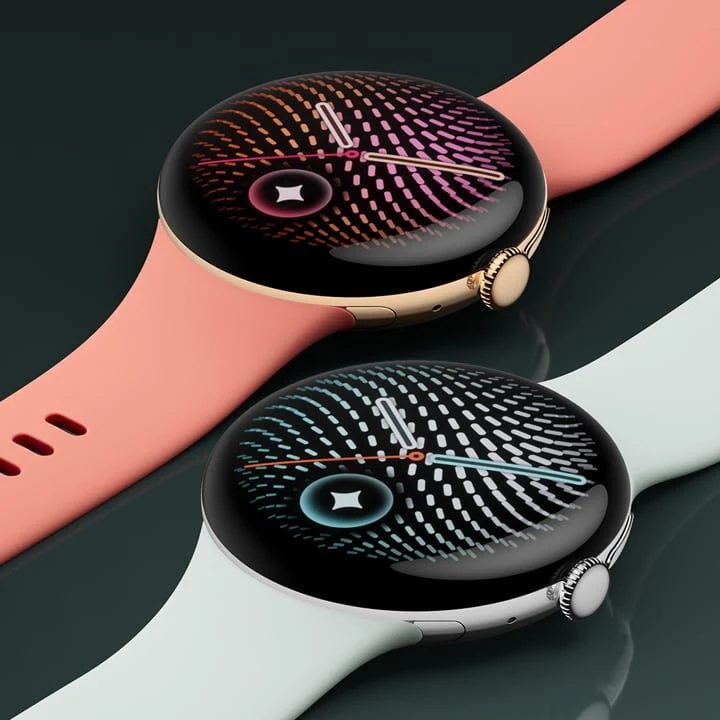
Google, on the other hand, leans into traditional watchmaking aesthetics. The Pixel Watch 5 features a stunning, domed circular design that looks like a piece of high-end jewelry. Available in 41mm and 45mm sizes, the real showstopper is the brand-new Actua 360 display. It peaks at an eye-searing 3,000 nits of brightness, absolutely destroying the Apple Watch in direct sunlight legibility. Whether you are running a marathon in Texas or lounging on a beach in Florida, the Pixel Watch 5's screen is undeniably superior outdoors. Plus, Google offers unique US-exclusive designs, like the stunning Stephen Curry Special Edition.
Winner for Outdoor Visibility: Google Pixel Watch 5
Winner for Screen Real Estate: Apple Watch Series 11
Both of these devices have transcended basic step-counting. They are now FDA-cleared, proactive health guardians. But they focus on different chronic conditions.
Apple's Focus: Sleep and Heart Rhythms
The Apple Watch Series 11 is a phenomenal device for cardiovascular monitoring. It carries over excellent features like an FDA-cleared ECG app, high/low heart rate notifications, and blood oxygen tracking. However, its standout 2026 features are Sleep Apnea Detection and Hypertension Alerts. By monitoring your breathing disturbances overnight, the Series 11 can alert you to potential sleep apnea, prompting you to consult a doctor.
Google's Focus: Metabolic and Blood Pressure Trends
Google has taken a massive leap forward with the Pixel Watch 5. Rolling out via a software update in September 2026, the device will introduce Blood Pressure Trends and Insulin Resistance Tracking. Using a combination of advanced optical sensors and machine learning algorithms, the Pixel Watch 5 tracks these metabolic and cardiovascular trends over a 30-day period. For millions of Americans managing pre-diabetes or hypertension, having passive insulin resistance tracking on a smartwatch is nothing short of revolutionary.
The Verdict: If you struggle with sleep disorders, Apple wins. If you are focused on metabolic health and blood pressure, Google takes the crown.
In 2026, a smartwatch needs to be incredibly intelligent. Both Apple and Google have brought heavy-hitting AI capabilities directly to the wrist.
The Apple Watch Series 11 is powered by the ultra-fast S10 chip. Apple has heavily optimized Siri for on-device processing, meaning you can set timers, log health data, and initiate workouts without needing an internet connection. The Series 11 also upgraded its cellular modem to support 5G connectivity, making music streaming and phone calls incredibly fast and reliable when you leave your iPhone at home. Both watches feature a generous 64GB of internal storage for your music and podcasts.
The Google Pixel Watch 5 utilizes the Snapdragon W5 Gen 2 Accelerated processor. While it only supports LTE rather than 5G, Google makes up for it with software. The Pixel Watch 5 is fully integrated with Gemini AI, which now runs offline. You can use generative AI to create custom watch faces from text prompts, and Gemini proactively surfaces contextual information—like flight details or calendar invites—exactly when you need them. Google claims AI processing is 20% faster on this generation.
Battery life remains the biggest pain point for smartwatch users in the US. No one wants to pack a proprietary charging puck for a quick weekend getaway.
If you hate charging your watch every single night, the Pixel Watch 5 gives you a lot more breathing room.
Here is the harsh reality of the US smartwatch market: your smartphone dictates your smartwatch.
Both devices start at $399 for their base Wi-Fi models, putting them on equal footing in terms of entry-level premium pricing. The Google Pixel Watch 5 Stephen Curry Special Edition will cost a bit more, starting around $579.
If you live in the Apple ecosystem, the Apple Watch Series 11 is a phenomenal, highly refined device. The addition of 5G, sleep apnea detection, and the massive 46mm screen make it the best smartwatch Apple has ever produced.
However, if you are an Android user—or if you are considering switching ecosystems—the Google Pixel Watch 5 is arguably the most exciting wearable of 2026. With a 3,000-nit Actua display that outshines the competition, superior 40-hour battery life, and groundbreaking insulin resistance tracking, Google has finally built a smartwatch that doesn't just compete with Apple, but surpasses it in several key areas.
Choose your ecosystem, strap it on, and step into the future!
Does the Pixel Watch 5 work with an iPhone?
No. Just like previous generations, the Google Pixel Watch 5 is exclusively compatible with Android smartphones running Android 12.0 or newer.
Which watch is better for swimming?
Both watches are phenomenal for swimmers. The Apple Watch Series 11 has a WR50 water resistance rating, a depth gauge, and a water temperature sensor. The Pixel Watch 5 is IP68 rated and waterproof up to 50 meters (5 ATM).
Do I need a cellular plan for the health features to work?
No. All health tracking features (ECG, blood pressure trends, sleep tracking) function perfectly on the base Wi-Fi/Bluetooth models, provided your smartphone is nearby to sync the data.
Is 5G really necessary on a smartwatch?
While the Apple Watch Series 11 boasts 5G and the Pixel Watch 5 sticks to LTE, the difference on a wrist-worn device is minimal. LTE is more than fast enough for streaming Spotify, receiving texts, and making phone calls on a watch.
DevDuniya
 DevDuniya
DevDuniya
DevDuniya
