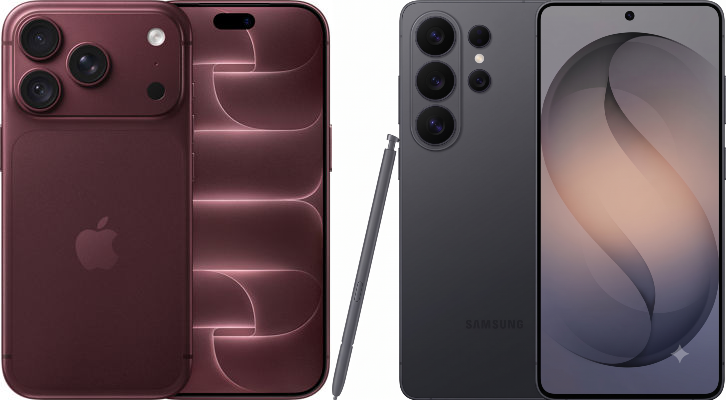
iPhone 18 Pro Max vs Galaxy S26 Ultra: Top 10 Camera & Spec Differences You Need to Know
The flagship smartphone showdown of 2026 has officially arrived, bringing two titanium powerhouses into direct competition: Apple’s newly unveiled iPhone 18 Pro Max and Samsung’s AI-powered Galaxy S26 Ultra. If you are preparing to upgrade your device this year, deciding between these two mobile photography behemoths requires looking far beyond basic spec sheets.
While both flagships deliver jaw-dropping photo quality, Apple and Samsung have taken fundamentally divergent paths in optical engineering, computational photography, video production codecs, and artificial intelligence integration. Locking yourself into a 36-month carrier financing agreement is a major financial commitment—making it essential to understand how these hardware differences translate to real-world everyday use.
Whether you are capturing fast-moving kids, shooting video content for social media, or seeking the best value on your next trade-in, here is the definitive breakdown of the top 10 differences between the iPhone 18 Pro Max and Galaxy S26 Ultra.
1. Main Camera Philosophy: 200MP ProScaler Monster vs. 48MP Pro Fusion
The primary sensor specs showcase completely different engineering philosophies:
- Samsung Galaxy S26 Ultra: Features a massive 200MP wide sensor backed by Samsung’s upgraded ProScaler image engine. By default, it uses heavy pixel-binning to shoot ultra-detailed 12MP or 50MP images, but allows creators to shoot at full 200MP resolution for extreme cropping flexibility without losing clarity.
- iPhone 18 Pro Max: Retains Apple's refined 48MP standard, but pairs it with next-generation "Pro Fusion" software processing. Instead of chasing raw megapixel metrics, Apple captures full-spectrum spatial data to instantly fuse 24MP detail-rich images with 48MP high-dynamic-range shots.
The Real-World Takeaway: If your priority is zooming into distant landscape photos or printing massive canvas prints, Samsung’s 200MP sensor offers unmatched post-capture resolution. If you prefer smaller image file sizes with perfectly natural texture retention right out of the shutter, Apple’s 48MP Pro Fusion approach is built for you.
2. Aperture Control: Native Mechanical Variable Aperture vs. Fixed Super-Wide F1.4
Depth-of-field control and low-light performance split dramatically between these two flagships this year:
For the first time, the iPhone 18 Pro Max introduces a native mechanical variable aperture system on its primary lens. The aperture physically opens and closes between ƒ/1.48, ƒ/1.8, ƒ/2.8, and ƒ/4.0. This physically changes the depth of field, letting portrait photographers shoot wide open at ƒ/1.48 for gorgeous optical bokeh, or step down to ƒ/4.0 to keep an entire group of people in crisp focus—all without artificial software blurring.
Conversely, Samsung opted for a fixed, ultra-wide F1.4 aperture on the S26 Ultra’s 200MP main lens. While it lacks physical mechanical steps, this incredibly wide fixed opening acts like a light bucket, gathering immense amounts of light naturally for astrophotography and pitch-black night shots.
3. Telephoto Hardware: Tetraprism (4x/8x Crop) vs. Dual Optical Zoom (3x/5x/10x)
If you regularly attend concerts, sporting events, or wildlife outings, telephoto reach can make or break your phone purchase.
Samsung continues its dominance in dedicated optical glass by equipping the Galaxy S26 Ultra with a versatile dual-telephoto array: a dedicated 10MP 3x optical lens for classic portraits, alongside a high-resolution 50MP 5x optical periscope lens that effortlessly crops into 10x optical-quality zoom.
Apple has streamlined its tetraprism zoom setup on the iPhone 18 Pro Max, upgrading to a single high-resolution 48MP 4x optical telephoto lens. By utilizing high-pixel sensor cropping, Apple achieves crisp 8x optical-quality zoom. While vastly improved over older models, Samsung still holds the edge for extreme long-distance clarity beyond 10x.
Shoppers looking for high-tier zoom in a slightly smaller form factor should also check out the smaller iPhone 18 Pro deals to see how Apple’s compact camera layout compares.
4. Low-Light Ultrawide Performance & Macro Shooting
Ultrawide cameras are essential for architectural landscapes and tight interior shots, but low-light performance has historically suffered. Both manufacturers tackle this issue with upgraded optics:
The Galaxy S26 Ultra features a wider 50MP F1.9 ultra-wide camera, allowing significantly more light to strike the sensor pixels during evening photography. The iPhone 18 Pro Max counters with a 48MP ƒ/2.2 ultra-wide sensor. While Apple’s lens aperture is technically slightly narrower than Samsung's, Apple relies on advanced multi-frame exposure stacking via its Photonic Engine to eliminate shadow noise.
5. Front-Facing Camera Evolution: 18MP Center Stage vs. AI Skin-Tone Engine
Selfie photography and video calling receive tailored upgrades on both devices:
Apple upgraded the front camera on the iPhone 18 Pro Max to a new 18MP sensor with a bright ƒ/1.9 aperture. It officially integrates hardware-based "Center Stage," automatically keeping you framed during FaceTime calls or mobile vlogging. Samsung keeps the physical front camera hardware at 12MP (F2.2) on the S26 Ultra, but completely overhauls the backend ISP processing to deliver truer skin tones and preserve facial texture under harsh indoor lighting.
6. Creator Video Workflows: ProRes RAW @ 4K120 vs. The New APV Codec
Mobile video capture remains a fierce battleground for YouTubers, TikTokers, and filmmakers:
- iPhone 18 Pro Max: Maintains Apple’s crown for professional mobile video. It supports full ProRes RAW workflows and shoots buttery-smooth 4K Dolby Vision at up to 120 fps for hyper-detailed slow-motion cinematic video.
- Galaxy S26 Ultra: Introduces Samsung’s groundbreaking APV (Advanced Professional Video) codec. This open-standard codec gives creators uncompressed color dynamic range without producing the massive, storage-choking file sizes typical of Apple’s ProRes formats.
7. Software Philosophy: Photonic Engine Realism vs. Generative Galaxy AI
Perhaps the biggest non-hardware distinction is how each phone handles photo processing after you hit the shutter button:
Apple utilizes its Photonic Engine and Photographic Styles 3 to manipulate light, skin tones, and color balance at the precise moment of capture. Apple’s goal is pure realism and stylistic consistency—ensuring your photos look authentically like the real scene.
Samsung embraces post-capture magic via proactive Galaxy AI. The Galaxy S26 Ultra empowers users to completely rewrite their photos post-shot: effortlessly moving or removing objects, auto-filling background elements, enhancing facial sharpness, and digitally reimagining lighting conditions using generative algorithms.
8. Integrated S Pen Productivity vs. Touch-First iOS Interface
The Galaxy S26 Ultra retains Samsung’s iconic built-in S Pen stylus, seamlessly docked inside the bottom titanium frame. This gives Galaxy users a massive productivity edge for annotating PDFs, drawing design drafts, taking quick handwritten notes, and triggering the camera shutter remotely via Bluetooth gestures.
The iPhone 18 Pro Max remains strictly touch-first, lacking Apple Pencil support. However, it integrates smooth haptic feedback and dynamic touch gestures tailored for single-handed navigation across iOS.
9. Operating System Ecosystem: iOS Precision vs. One UI Multi-Tasking
Choosing between these devices often comes down to software preference:
The iPhone 18 Pro Max runs iOS, emphasizing fluid animations, tight security sandboxing, and seamless connectivity with Mac, iPad, and Apple Watch ecosystems. The Galaxy S26 Ultra runs Android topped with Samsung’s custom One UI, offering unmatched multi-tasking—including side-by-side app split screening, floating pop-up windows, and full desktop workstation emulation via Samsung DeX.
10. US Carrier Deals, Trade-In Offers & Total Cost of Ownership
Both devices represent top-tier flagship pricing, making it essential to leverage the best phone deals in the USA before purchasing. US carriers—including AT&T, Verizon, and T-Mobile—routinely launch aggressive promotional incentives:
- Trade-in Value: Upgrading from an older flagship like the iPhone 17 Pro Max or Galaxy S25 Ultra can yield up to $1,000 in promotional bill credits spread over 36 months when switching to top-tier unlimited data plans.
- Promotions: Samsung frequently offers free double-storage upgrades (e.g., getting 512GB for the price of 256GB) during pre-order windows, whereas Apple deals often revolve around bundled carrier gift cards and trade-in bonuses.
Be sure to explore our dedicated hub for all current phone deals to find which carrier offers the lowest monthly payment for your budget.
Quick Camera & Hardware Specification Comparison
| Specification | iPhone 18 Pro Max | Galaxy S26 Ultra |
|---|---|---|
| Main Camera | 48MP (Mechanical Variable ƒ/1.48–ƒ/4.0) | 200MP (Fixed F1.4 Aperture) |
| Telephoto Zoom | 48MP 4x Optical (8x Sensor Crop Quality) | 50MP 5x Optical + 10MP 3x Optical |
| Ultrawide Sensor | 48MP (ƒ/2.2) | 50MP (F1.9) |
| Selfie Camera | 18MP (ƒ/1.9) with Center Stage | 12MP (F2.2) with ISP Skin Engine |
| Video Formats | ProRes RAW, 4K Dolby Vision @ 120fps | APV Codec, 8K Video Recording |
| Image Processing | Photonic Engine, Photographic Styles 3 | Galaxy AI, ProScaler Engine |
| Built-in Stylus | No | Yes (Embedded S Pen) |
Final Verdict: Which 2026 Flagship Belongs in Your Pocket?
Choosing between the iPhone 18 Pro Max and Samsung Galaxy S26 Ultra ultimately comes down to your personal priorities:
Choose the iPhone 18 Pro Max if: You want absolute mechanical precision over physical aperture, industry-standard ProRes video recording, class-leading video performance, and seamless integration with your existing Apple tech stack.
Choose the Galaxy S26 Ultra if: You demand extreme 200MP detail, versatile long-range zoom capabilities, generative AI photo manipulation, and built-in S Pen productivity for work and creativity.
Before buying, head over to DevDuniya’s device database to compare comprehensive specs, or check out our latest analysis on the iPhone Duo lineup and alternative flagships like the Google Pixel 11 Pro XL. For more deep dives, news, and tech tutorials, don't forget to browse our official DevDuniya tech blogs!

