Snapdragon 8 Elite Overheating? Qualcomm’s CMO Just Fired Back at the Rumors
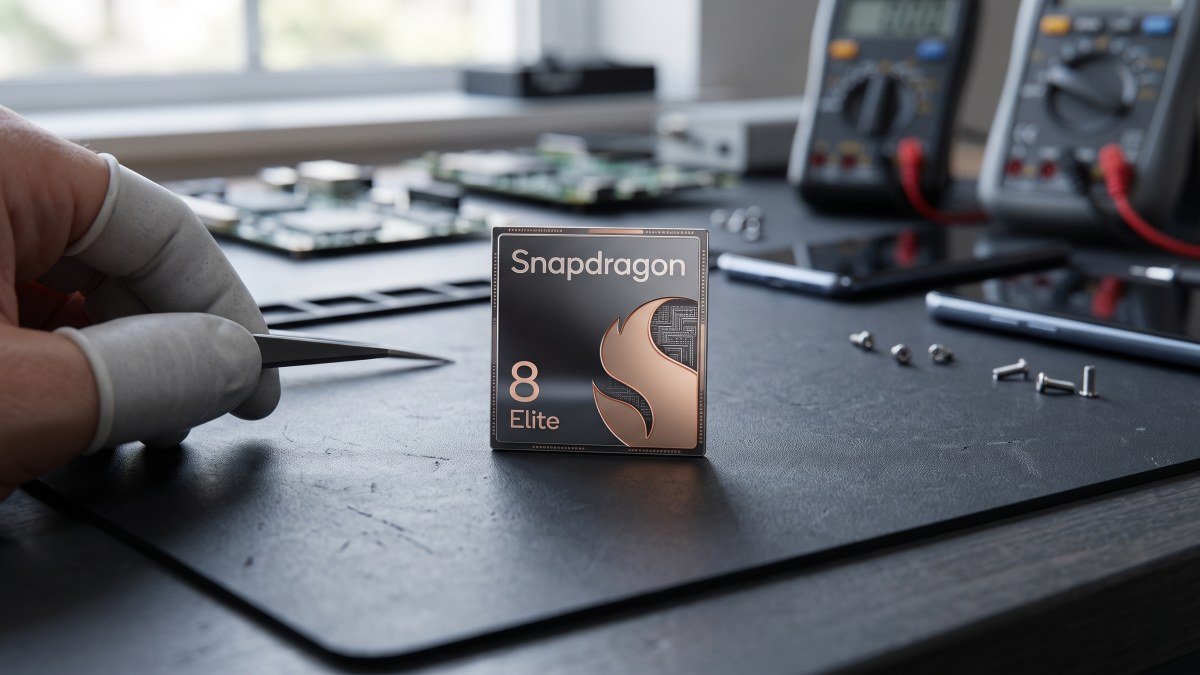
The smartphone industry thrives on leaks, but few things cause as much panic among tech enthusiasts as the word "overheating." For power users waiting to upgrade to the 2027 wave of Android flagships, the processor running the show is everything. Lately, the rumor mill has been aggressively churning out claims that Qualcomm’s highly anticipated Snapdragon 8 Elite Gen 6 is struggling with massive thermal throttling and dangerous heat levels during early testing.
With major upcoming releases like the Samsung Galaxy S27 Ultra reportedly relying on this exact silicon in the US market, these rumors had the potential to derail billions of dollars in pre-orders. But Qualcomm is not taking this lying down.
In a rare and direct move, Qualcomm’s Chief Marketing Officer, Don McGuire, took to social media to officially shut down the panic. Here is a complete breakdown of McGuire's response, what is actually causing these early thermal anomalies, and why you probably shouldn't worry about your next phone melting in your hands.
The Official Stance: "No Systemic Thermal Issues"
Usually, massive semiconductor companies like Qualcomm ignore supply chain gossip, preferring to let the final product speak for itself. However, the volume of the Snapdragon 8 Elite Gen 6 overheating rumors grew so loud that it forced an executive intervention.
Posting directly to his X (formerly Twitter) account, Qualcomm CMO Don McGuire addressed the controversy head-on, delivering a clear and unequivocal denial[cite: 1].
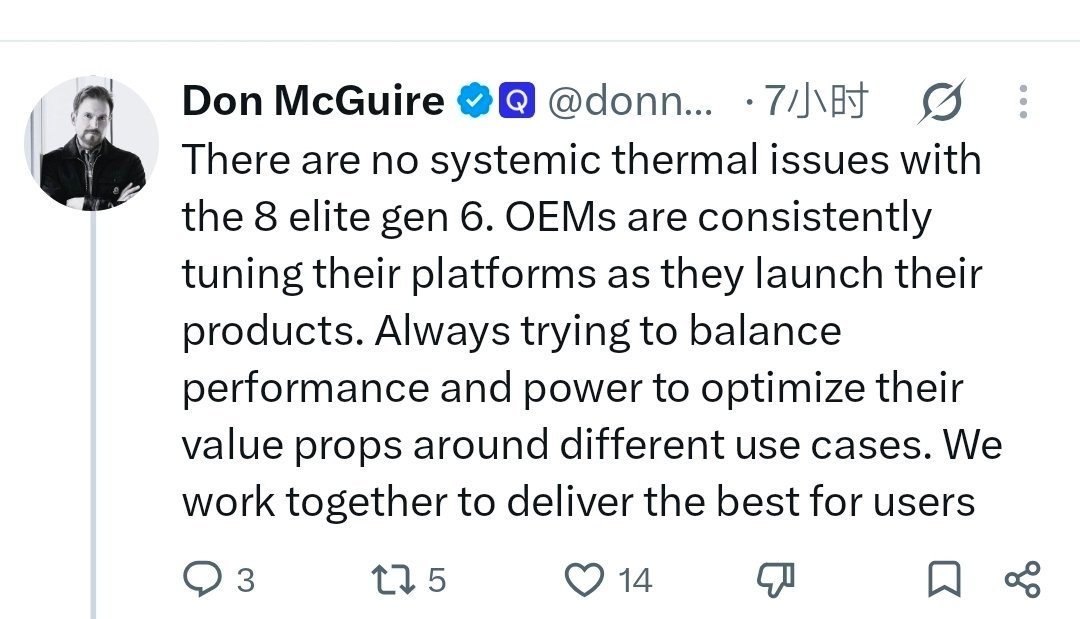
In his statement, McGuire explicitly wrote: "There are no systemic thermal issues with the 8 elite gen 6. OEMs are consistently tuning their platforms as they launch their products. Always trying to balance performance and power to optimize their value props around different use cases. We work together to deliver the best for users."[cite: 1]
This statement is crucial because it shifts the blame away from a fundamental silicon flaw and points toward the normal, messy process of hardware integration.
What Does "OEM Tuning" Actually Mean?
To understand why these overheating rumors started in the first place—and why McGuire is technically correct—you have to understand how a smartphone is actually built.
Qualcomm designs the Snapdragon 8 Elite Gen 6 and manufactures it (likely on an ultra-efficient 2nm process node). But Qualcomm does not build the phone. They ship this raw, incredibly powerful processor to Original Equipment Manufacturers (OEMs) like Samsung, OnePlus, and Xiaomi.
When an OEM gets the chip, it is essentially a wild horse. If you let it run at its absolute maximum clock speed without restrictions, it will draw massive amounts of power and generate intense heat. This is exactly what happens during early engineering tests, which is where the "overheating" benchmark leaks originate from.
It is the OEM's job to "tune" the platform before it hits retail shelves. This involves:
- Software Governors: Writing code that tells the processor exactly when to throttle down its speed to prevent heat buildup during everyday tasks like scrolling Instagram.
- Thermal Hardware: Designing physical cooling solutions, such as massive liquid-cooled vapor chambers and graphite thermal pads, to pull heat away from the processor and dissipate it through the phone's chassis.
- Battery Balancing: Adjusting the voltage so the chip delivers flagship gaming performance without draining a 5,000mAh battery in two hours.
McGuire is confirming that the raw chip itself is fine[cite: 1]. The elevated temperatures seen in early leaks are simply the result of smartphone brands currently figuring out how to tame the processor inside their specific chassis designs.
The Context: The 2027 Android Chip War
Qualcomm's rapid defense of the Snapdragon 8 Elite Gen 6 makes perfect sense when you look at the fiercely competitive landscape of 2027. The company cannot afford any bad PR right now because they are facing unprecedented threats from both Samsung and Google.
As we detailed in our Galaxy S27 Ultra chip comparison, Samsung’s in-house Exynos 2700 is reportedly outperforming the Snapdragon in early multi-core benchmarks. If US buyers believe the Snapdragon variant will overheat during heavy gaming sessions, they will feel cheated out of the superior Exynos model.
Simultaneously, Google is moving its upcoming Tensor G7 processor to TSMC’s 2nm node, explicitly focusing on localized AI efficiency and thermal stability rather than raw burst speed. If the Snapdragon develops a reputation as a "pocket heater," power users might jump ship to the Pixel 12 ecosystem entirely.
The Wait for Retail Reality
While Don McGuire’s statement is reassuring, PR damage control is not the same thing as real-world testing[cite: 1]. The true test of the Snapdragon 8 Elite Gen 6 will not happen in a Qualcomm lab; it will happen when retail units finally reach the hands of consumers and reviewers.
The ultimate benchmark will be sustained performance. Can the chip run a demanding game like Genshin Impact or Call of Duty: Warzone Mobile at 120 frames per second for 45 minutes without the screen dimming and the back glass becoming too hot to touch?
Until retail devices officially launch, it is best to treat early benchmark leaks with extreme skepticism. Engineering samples are meant to run hot while developers find their limits. If you are looking to upgrade today to a device with proven thermal stability, be sure to check out our daily tracker for the best phone deals in the USA. Keep following the DevDuniya tech blogs as we continue to track the latest silicon wars leading up to the 2027 flagship season!