Google and Samsung Smart Glasses Pre-Orders Open: Everything You Need to Know
For the past two years, Meta’s Ray-Ban smart glasses have enjoyed an uncontested monopoly over the face-wearable tech market, capturing over 80% of global shipments. If you were an Android power user looking for a seamless, AI-driven pair of smart frames, you were forced to compromise and live within Meta's social-media-focused ecosystem. As of this week, that monopoly is officially over.
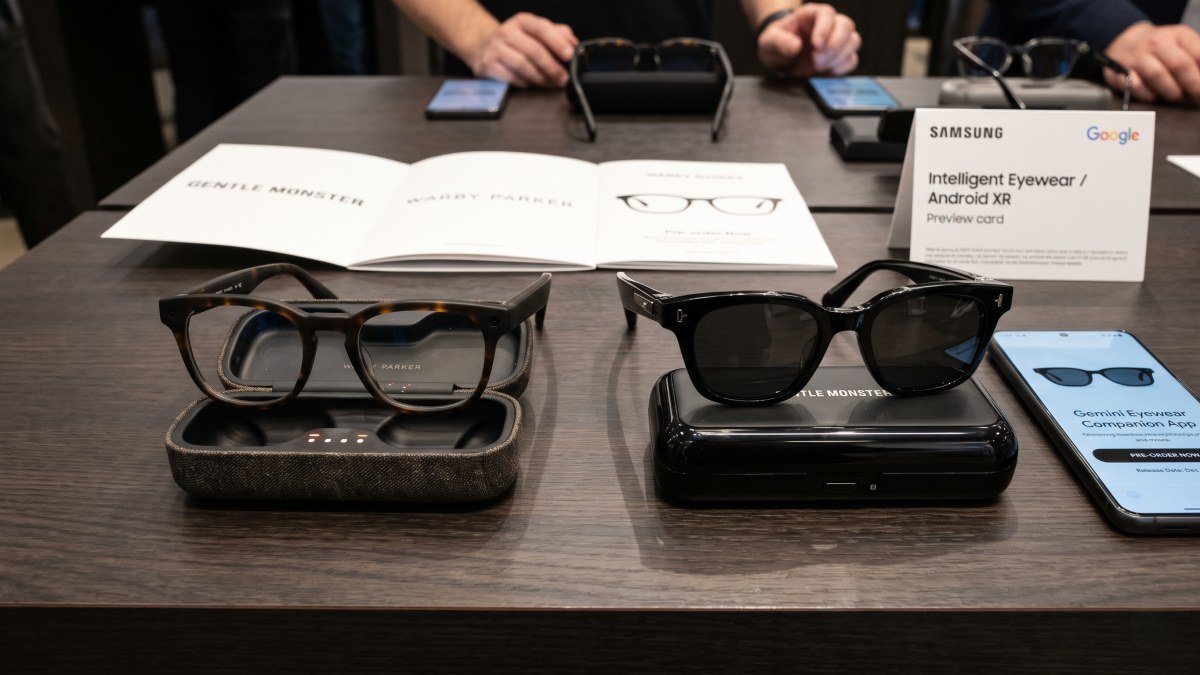
Google and Samsung have jointly announced their highly anticipated entry into the wearable space, officially opening pre-orders for their new "Intelligent Eyewear" platform. Built on the cutting-edge Android XR operating system and powered by Google’s multimodal Gemini AI, these glasses are designed to be the ultimate smartphone companion for the 2026 holiday season. But instead of designing a bulky, unwearable piece of plastic, the tech giants made a brilliant strategic pivot: they partnered directly with Warby Parker and Gentle Monster to design the hardware.
If you are debating whether to add AI glasses to your everyday carry, you need to understand exactly what you are putting on your face. From battery endurance and real-time translation features to the strict privacy guardrails preventing facial recognition, here is our definitive deep dive into the new Google and Samsung smart glasses, and whether they are worth your pre-order.
The Frames: Warby Parker vs. Gentle Monster
The biggest hurdle in the smart glasses market has historically been the "mirror test"—if the frames make you look like a cyborg, you will simply leave them in a drawer. By tapping Warby Parker (the US darling of affordable, trendy eyewear) and Gentle Monster (the South Korean high-fashion powerhouse), Google and Samsung have ensured there is a frame for every demographic.
The Warby Parker collection is tailored exclusively for the US market. These frames start at a highly competitive $395 and prioritize everyday subtlety. Warby Parker is launching three distinct styles—the Alden, the Reid, and the Wren—available in classic finishes like Pine, Saddle, and Jet Black. The absolute biggest advantage of the Warby Parker lineup is accessibility: you can easily order them with your specific medical prescription or transition sunglass lenses directly through their existing retail infrastructure.
The Gentle Monster collection caters to the avant-garde, fashion-forward buyer. Starting at $449 (and scaling up to $489 depending on the finish), these frames are noticeably louder. Gentle Monster is offering six unique designs available in 16 variations, featuring bold colorways like dark red, pink, grey, and yellow.
| Feature | Warby Parker Collection | Gentle Monster Collection |
|---|---|---|
| Starting Price (US) | $395.00 | $449.00 - $489.00 |
| Design Variations | 3 Styles (Alden, Reid, Wren) in 3 Colors | 6 Styles across 16 color variations |
| Target Aesthetic | Everyday classic, subtle tech | High fashion, bold streetwear |
| Regional Availability | United States Only | United States and South Korea |
Swipe sideways to see all table columns →
- Warby Parker Collection
- $395.00
- Gentle Monster Collection
- $449.00 - $489.00
- Warby Parker Collection
- 3 Styles (Alden, Reid, Wren) in 3 Colors
- Gentle Monster Collection
- 6 Styles across 16 color variations
- Warby Parker Collection
- Everyday classic, subtle tech
- Gentle Monster Collection
- High fashion, bold streetwear
- Warby Parker Collection
- United States Only
- Gentle Monster Collection
- United States and South Korea
Display Technology, Battery Life, and Hardware Specs
Before you place a pre-order, you must understand a critical hardware distinction: there is no holographic display in the lenses. This is not the disastrous return of Google Glass. Both Samsung and Google intentionally opted for an "audio-first" augmented reality experience to keep the hardware feather-light.
Weighing in at roughly 41 grams, these frames feel nearly identical to standard optical glasses. Despite the minimal weight, the hardware packed into the arms is remarkable. The glasses feature 2GB of RAM, 64GB of internal storage, and a 12MP HDR camera capable of shooting 3K video at 30fps (or standard 2K video). The audio is driven by open-ear directional speakers that beam sound directly into your ear canal, allowing you to listen to podcasts or AI responses while remaining completely aware of your surroundings.
Battery anxiety is a massive concern with wearables, but Samsung’s engineering division has delivered an impressive power curve. The frames themselves provide up to 9 hours of continuous standalone usage. When placed inside their leather-bound charging case, you can extract a massive 72 hours of total uptime before needing to plug the case into a wall outlet.
Multimodal Gemini AI: What Can These Glasses Actually Do?
The true selling point of this Android XR platform is the seamless integration of Google’s Gemini AI. Triggered by the "Hey Gemini" hotword, or by simply tapping the touch-sensitive frame, the glasses act as a hands-free, hyper-intelligent assistant.
Because Gemini is "multimodal," it can simultaneously process what you are looking at through the 12MP camera while listening to your vocal commands. The real-world applications for this are staggering:
- Real-Time Translation: Look at a menu written in French while traveling and ask Gemini, "What is the vegetarian option here?" The glasses will read the menu, translate the text, and whisper the answer directly into your ear.
- Contextual Tech Support: If your home internet is failing, look at the blinking lights on your modem and ask Gemini what is wrong. (Though for deeper networking issues, you should still rely on our guide to fixing hidden gigabit router settings).
- Navigation: Receive turn-by-turn walking directions via audio without ever pulling your Google Pixel 10a out of your pocket.
Compatibility: Will They Work With Your Phone?
Smart glasses are tethered accessories; they rely on your smartphone’s cellular connection and processing power to handle heavy AI tasks. Fortunately, Google and Samsung have kept the compatibility relatively open, though older devices are strictly excluded.
If you are an Android user, you must own a premium device running a modern operating system. The official compatibility list includes the Samsung Galaxy S-series, the Galaxy S FE models, and the Z Fold/Flip series running One UI 9.0 or higher. On the Google side, you need a Pixel 7 or newer. If you recently grabbed one of the massive Galaxy S26 Ultra unlocked deals or upgraded to the Pixel 11 Pro, you are fully supported.
Surprisingly, iPhone users are not entirely locked out. Apple owners can use the Android XR glasses, but the hardware threshold is steep: you must have an iPhone 13 Pro or newer (specifically requiring 6GB of RAM or more) running iOS 26.6 or later.
The Privacy Elephant in the Room
Strapping an active 12MP camera and an always-listening microphone to your face naturally triggers severe privacy anxieties. The public backlash against the original Google Glass was brutal, and both Google and Samsung are desperate to avoid repeating history.
To combat this, the Intelligent Eyewear platform utilizes strict on-device processing. Samsung has officially confirmed that the visual data collected by the glasses' camera will not be uploaded to the cloud to train future Google AI models, nor will it be harvested to serve you targeted advertising. Furthermore, the localized on-device processing is explicitly programmed to prevent the real-time facial identification of strangers passing by in public. A bright LED indicator light also illuminates whenever the camera is actively recording, providing a necessary social cue to those around you.
Google vs. Meta: The 2026 Showdown
Why should you buy the Warby Parker Android glasses instead of the Meta Ray-Bans? It entirely comes down to which digital ecosystem you prioritize.
Meta’s glasses are fundamentally designed as social media tools. They excel at live-streaming directly to Instagram and capturing POV footage for TikTok. If your life revolves around the Meta ecosystem, the Ray-Bans are still the superior choice.
However, the Google/Samsung collaboration is built for pure utility. If you use Gmail, Google Maps, Google Calendar, and Android, the deep integration of Gemini makes the Warby Parker frames vastly more useful for daily productivity. You are trading social media gimmicks for a genuine, intelligent digital assistant that helps you navigate the physical world.
Pre-Order Process and US Shipping Timeline
If you are ready to take the leap into everyday wearable AI, the pre-order window is officially open right now. US consumers can reserve their units directly through the Warby Parker website, the Google Store, and Samsung’s digital storefronts.
The general retail release and the first wave of pre-order shipments are hard-locked for December 10, 2026. This places the glasses perfectly in the middle of the holiday shopping rush. Given the highly customized nature of ordering prescription lenses through Warby Parker, we highly advise getting your medical prescription verified and your pre-order placed immediately to avoid the inevitable mid-December backorders.
The Verdict: Who Should Buy These in 2026?
The Google and Samsung Intelligent Eyewear platform represents the most mature, practical execution of smart glasses we have seen to date. By eliminating the heavy internal displays and partnering with respected fashion brands, they have solved the biggest historical problem with face computers: they actually look good.
If you are a tech enthusiast deeply embedded in the Android ecosystem, placing a $395 pre-order for the Warby Parker frames is an incredibly justifiable holiday purchase. You gain access to real-time multimodal AI, hands-free navigation, and a fantastic pair of open-ear headphones disguised as stylish everyday eyewear. As we move into 2027 and developers begin pushing the boundaries of the Android XR platform, these glasses are perfectly positioned to become as indispensable as your smartwatch.