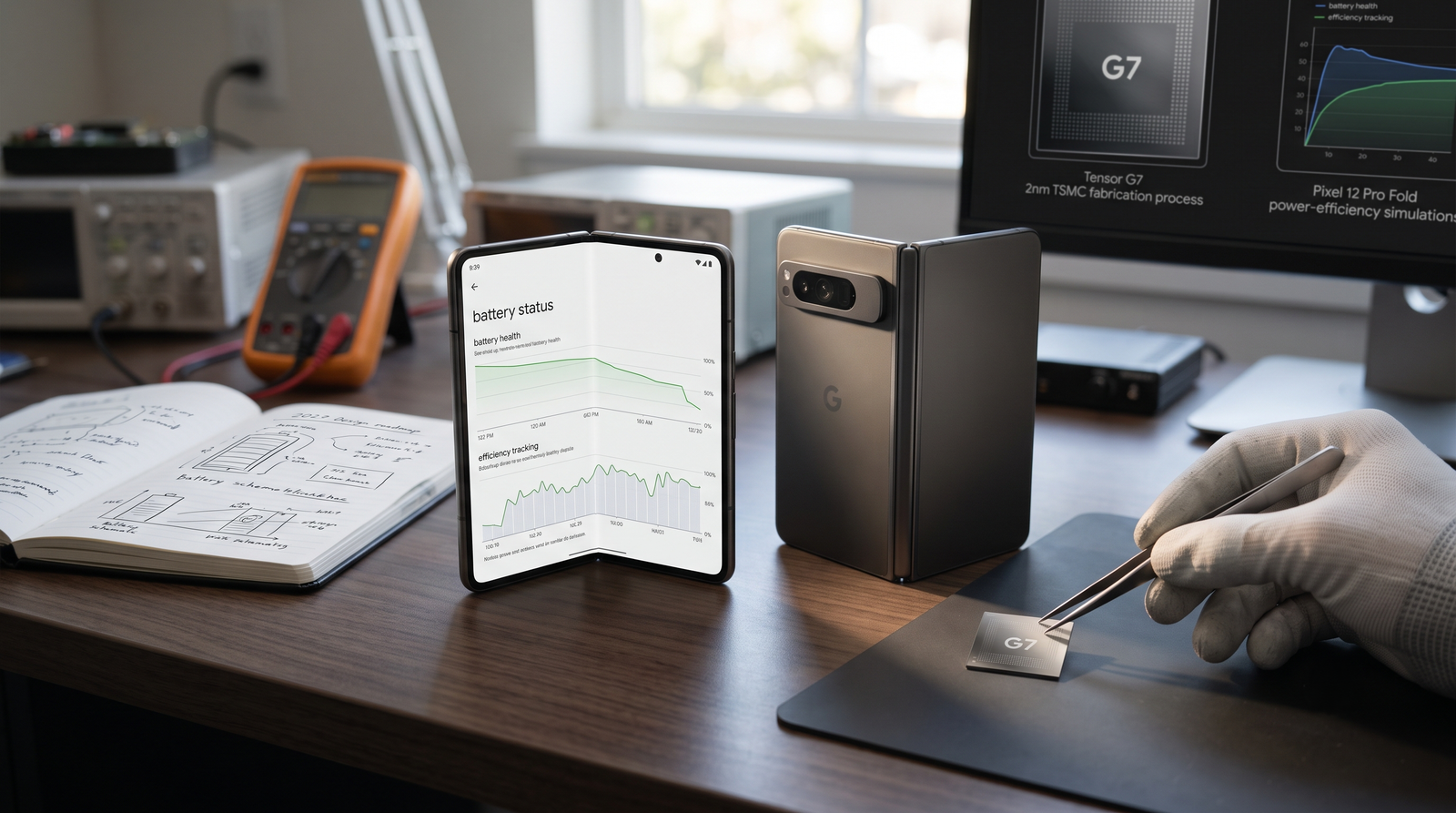
Why the Pixel 12’s 2nm Tensor G7 Chip is the Upgrade You’ve Been Waiting For
Google’s Pixel lineup has always been a software and computational photography powerhouse, but its hardware has occasionally struggled to keep pace with the ambitions of its engineers. If you have ever felt your Pixel heat up during a long video call or watched your battery plummet while using AI photo editing tools, you are well aware of the limitations of older Tensor generations.
However, the highly anticipated Google Pixel 12, expected to launch in August 2027, is poised to change the narrative entirely. The secret weapon is the upcoming Tensor G7 processor, internally codenamed "LaJolla". This custom silicon represents the most important hardware shift in Pixel history. Here is a deep dive into why moving away from Samsung's foundries to TSMC's 2nm node is the ultimate upgrade you have been waiting for.
The Massive Shift: Samsung vs. TSMC 2nm
Since the inception of the Tensor program with the Pixel 6, Google has partnered closely with Samsung's semiconductor division to manufacture its custom chips. While this partnership allowed Google to design custom AI silicon, Samsung's fabrication nodes have historically lagged behind industry leader TSMC in thermal efficiency and power management.
To understand why this fabrication change is such a monumental upgrade, take a look at how TSMC's upcoming 2nm node compares to Samsung's legacy Tensor fabrication:
| Feature / Specification | Legacy Tensor (Samsung Foundry) | Tensor G7 "LaJolla" (TSMC 2nm) |
|---|---|---|
| Fabrication Process | 4nm / 3nm Samsung Nodes | TSMC 2nm Node |
| Power Efficiency | Moderate (Higher Voltage Required) | ~25% - 30% Power Reduction |
| Thermal Stability | Prone to throttling under heavy load | High thermal resistance / Low heat output |
| Modem Pairing | Legacy Samsung Exynos Modems | MediaTek M90 High-Efficiency Modem |
For the Tensor G7, Google is reportedly severing its fabrication ties with Samsung and moving production entirely to TSMC’s cutting-edge 2nm process. In processor manufacturing, a smaller nanometer (nm) number means that transistors are packed much tighter together. A 2nm architecture drastically reduces the distance electrical signals must travel, which inherently requires less voltage. This fundamental shift in physics means the Tensor G7 will run significantly faster while drawing less power than any previous Pixel chip.
Solving Battery Drain and AI Overheating
The transition to TSMC's 2nm node is not just about raw benchmark scores; it is about completely resolving the quality-of-life issues that have plagued power users.
Modern Pixels rely heavily on continuous, localized AI processing for features like Call Screen, Magic Eraser, and the Gemini assistant. These complex mathematical calculations push the processor incredibly hard. On older, less efficient fabrication nodes, this heavy lifting generates excessive heat. Once a processor gets too hot, the software is forced to "throttle" (slow down) performance to prevent damage, resulting in laggy interfaces and rapid battery drain.
By moving to a highly efficient 2nm process, the Tensor G7 will be able to sustain peak AI processing speeds without generating excess thermal energy. This means you can run intensive generative AI tasks, play demanding mobile games, and navigate using 5G without your device turning into a pocket heater, resulting in significantly longer screen-on time.
The MediaTek M90 Modem: Fixing Connectivity
The processor's core logic isn't the only component getting a major overhaul. Cellular connectivity has been a notorious weak point for the Pixel series, often leading to dropped calls, weak signal strength, and aggressive battery drain when the phone struggles to find a tower.
To combat this, the Pixel 12's Tensor G7 platform is expected to feature a brand-new modem supplier. Leaks indicate that Google is dropping Samsung's Exynos modem entirely in favor of the MediaTek M90 modem. This change is a massive step toward ensuring rock-solid 5G reliability. By pairing a hyper-efficient 2nm processor with a stable, power-conscious modem, the Pixel 12 is addressing the root causes of its historical battery woes.
The Ultimate August 2027 Upgrade
While the Pixel 11 will act as a transitional stepping stone, the Pixel 12 and its Tensor G7 chip represent the true realization of Google's hardware vision. By combining the unmatched efficiency of TSMC's 2nm node with a reliable MediaTek M90 modem, Google is finally building a physical foundation capable of supporting its incredible AI software.
If you are holding onto an older device and wondering when to make your next long-term smartphone investment, the August 2027 release of the Pixel 12 series might just be the perfect time to upgrade.